
"Douai seed"
15242 article(s) found

Fresh style of literature and art: SEED seed coffee
This store is in Changjiahui, a small one. The appearance looks like a retro van, the store has a large number of camera models and other retro elements, full of literary and artistic freshness. American coffee is only 19 yuan a cup, the rest are also more than 20 yuan, although cheap, but the taste is not bad, the entrance is not sour, lips and teeth stay fragrant. This soda costs 28 yuan a bottle, which is a little small by comparison.

Botanical characteristics of small seed Coffee characteristics of Coffee in Yunnan
1. Root coffee is a shallow root crop, and the plant propagated with seeds is a cone root system. From the point of view of varieties, the roots of small and medium grain species are shallow, while those of large grain species are deeper. Yunnan small grain coffee is a 3-year-old 4-year-old fruit tree with a deep main root of about 70cm. The lateral root that grows horizontally from the main root is called the horizontal lateral root, the vertical lateral root grows downward, and the root extracted from the lateral root is called the secondary lateral root.
A brief talk on the basic knowledge of Fine Coffee with Coffee beans
1. Summary: coffee is a perennial evergreen shrub or small tree of Rubiaceae. It is native to tropical Africa and has been cultivated for more than 2000 years. The Arabs began to grow coffee in 525 BC, and it was popular for Arabs to stir-fry coffee beans. They began to grow coffee beans on a large scale after the 15th century, and were widely distributed in the tropics and subtropics of Europe, Asia, Africa and Latin America after the 18th century.

The whole process of coffee bean cultivation and growth Coffee tree cultivation
Common questions about coffee bean cultivation: First, what is coffee seed? How are coffee seeds obtained? Coffee seeds, commonly known as coffee with shell dry beans, are coffee seeds that have not been removed from the mesocarp and silver skin. Coffee seeds are divided into Arabica seeds and Robusta seeds. The picture shows coffee green beans available for consumption. They are also two major commercial large-scale cultivation.

There are several seed treatment methods in coffee berries.
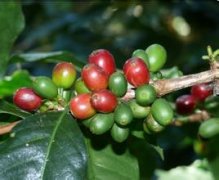
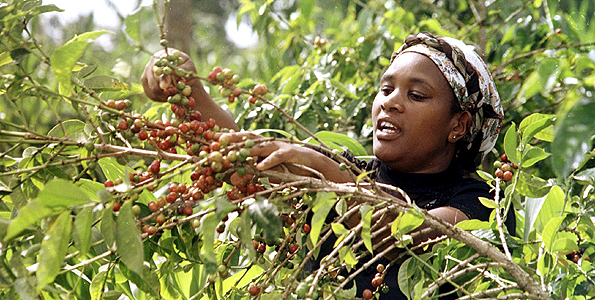
There are several seed processing methods in coffee berries or the use of an automated harvester can not distinguish ripe berries from green berries. The ripe coffee berries are bright red with sweet flesh and contain a pair of seeds, namely coffee beans (Coffee Beans). Coffee varieties can be divided into small, medium and large seeds, and the former contains caffeine.

Unveil the mystery of coffee allusions
Who first thought of roasting the seeds of coffee trees? And why?
The structure of coffee beans Coffee seeds Coffee net recommended Ethiopia Sidamo sun treatment Lion King
Some people often mistakenly think that coffee is directly grown with raw beans, and spend a long time thinking about how it does not germinate. Coffee is actually grown from seeds with an endocarp (Parchment). The endocarp (or parchment or paper skin) refers to the dark brown crust wrapped around the coffee seeds, and the coffee beans attached to that layer of skin are called Parchment Beans. And I'm going to open up the fully mature
Boutique Coffee Science talk about Coffee Fruit
The fruit is a berry, also known as comb fruit. Oval, 9-14 mm long, young fruit green, red at maturity, purplish red. Each fruit generally has two seeds, but also one or three, showing a semi-oval, there is a longitudinal groove, called grooves. The structure of a fruit in which the exocarp consists of a thin layer of hardwood human cells with stomata; the mesocarp (that is, pulp) is large and Lignified by several layers of polygons.

Yunnan Coffee Tour | which Yunnan Coffee Brand is good? how to grow Yunnan small Coffee
Professional coffee knowledge exchange more coffee bean information please pay attention to the coffee workshop (Wechat official account cafe_style) how to brew Yunnan small coffee actually this is the nth time to Yunnan, from the beginning of baking beans, gradually have questions about the variety of coffee, in addition to altitude, soil, climate and other factors, I personally think variety is the key to determine the flavor of beans. This time, all the way south, along the

Coffee and its products-terminology
The national standard of the people's Republic of China Coffee and its products Vocabulary GB/T 18007 1999 terms for coffee and its products this standard specifies the most commonly used terms for coffee and its products. This standard is applicable to the formulation and revision of relevant standards and documents, as well as the preparation and translation of professional manuals, teaching materials, books and periodicals. 2 Coffee nouns and definitions 2.1 General techniques

Botanical characteristics of small seed Coffee Coffee shallow Root crops
1. Root coffee is a shallow root crop, and the plant propagated with seeds is a cone root system. From the point of view of varieties, the roots of small and medium grain species are shallow, while those of large grain species are deeper. Yunnan small grain coffee is a 3-year-old 4-year-old fruit tree with a deep main root of about 70cm. The lateral root that grows horizontally from the main root is called the horizontal lateral root, the vertical lateral root grows downward, and the root extracted from the lateral root is called the secondary lateral root.

Yunnan small Coffee planting Technology Brand Flavor description Taste treatment method
Yunnan small grain coffee planting technology brand characteristics flavor description Zhukula is poor and backward, but it has an inextricable bond with coffee. In addition to growing coffee all over the country, the villagers all have a tradition of drinking coffee: self-growing, self-grinding and self-brewing, and now men, women and children in the village have the habit of drinking coffee. The villagers here have a special feeling about coffee trees.

How to grow Coffee Tree Seeds how to grow Coffee trees what kind of coffee does the sour kernel taste belong to?
Seedling emergence: planting in spring and spring, emergence in about 30 days; planting in summer, seedling emergence in 7-10. Although there is heating in winter, there is still a seasonal difference between a hot day and a hot day, so the time of emergence is also very long. Transplanting: when the true leaves of the seedlings grow forever, they can be transplanted. When selecting flowerpots, the diameter of the pot mouth should be the opposite of the crown diameter of the plant, and the root system should be released and can be opened. Selection of potted soil: I choose
Chinese Coffee Bean introduces Pu'er 's "Simao small seed Coffee"
Pu'er City is located between 22 degrees 02 to 24 degrees 50 minutes north latitude and 99 degrees 09 minutes to 102 degrees 19 minutes east longitude. Passing through the Tropic of Cancer, Pu'er City is a plateau climate zone with low latitude and humid monsoon climate in the south subtropics. It is in the same latitude as the world-famous coffee growing area Colombia, which is the golden zone of coffee cultivation. Cultivation of Simao small seed Coffee in Pu'er City

Yunnan Arabica Coffee Flower and Fruit Mountain Production Method Taste Manor Grinding Scale Variety Introduction
1. Sexual reproduction is a method of reproduction that can obtain a large number of seedlings at one time. The first is seed selection and seed treatment. Fine varieties are the basis for cultivating strong seedlings and improving yield. Fine varieties must be carefully selected. On the coffee mother tree, select completely mature, fruit shape is normal, full and full, size is consistent, with

How much is a small grain of Yunnan coffee from the fresh coffee fruit brought back from the trip to Yunnan?
Professional coffee knowledge exchange more coffee bean information please pay attention to the coffee workshop (Wechat official account cafe_style) how to brew Yunnan small coffee actually this is the nth time to Yunnan, from the beginning of baking beans, gradually have questions about the variety of coffee, in addition to altitude, soil, climate and other factors, I personally think variety is the key to determine the flavor of beans. This time, all the way south, along the

Structure diagram of coffee bean structure text roaster
Coffee bean structure text roaster structure diagram selection of coffee mother tree on the fully mature, normal shape, full, the same size, with two seeds of fruit. To remove the peel of the selected fruit, you must be careful to prevent damage to the seeds and affect the germination rate, and then put the peeled seeds in a ventilated and cool place to dry. The seed shell can be whitened and the seeds can not be exposed.
Cultivation techniques of Baoshan small-grain Coffee
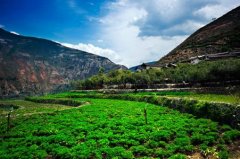
I. the environmental conditions required by small-grain coffee originated in Ethiopia in north-central Africa, located in 69 N, 3440 E, 13001900m above sea level, with 16001900mm precipitation and an average annual temperature of 20 ℃. In the process of long-term evolution, coffee has specific requirements for environmental conditions due to the joint action of biology and climate.

A brief introduction to the characteristics of Yunnan small-grain Coffee planting Technology Brand and Flavor description
Although the environmental problems of coffee cultivation can reach the standard of hot areas, they are far away from the equator, evaporation, large-scale coffee cultivation in Yunnan is less than 1100m above sea level, the severe drought in Yunnan in recent years, and the frost period in the producing areas, and so on, all make coffee planting can not be guaranteed normally, which directly affects the quality of coffee production. As for other processing problems, not to mention the quality of farmers, tea

How to identify the fresh coffee fruit sent back from Yunnan?
Typica: the shape is oval, the bean body is thin from the side, even if the altitude of the planting area is different, the thickness of the side of the raw bean will not be too different. Iron card species are most likely to be taken by Yemenis from Ethiopia to Malabar and India, and then to Indonesia by the Dutch. It was then brought from West India to the French colony of Martinique. With